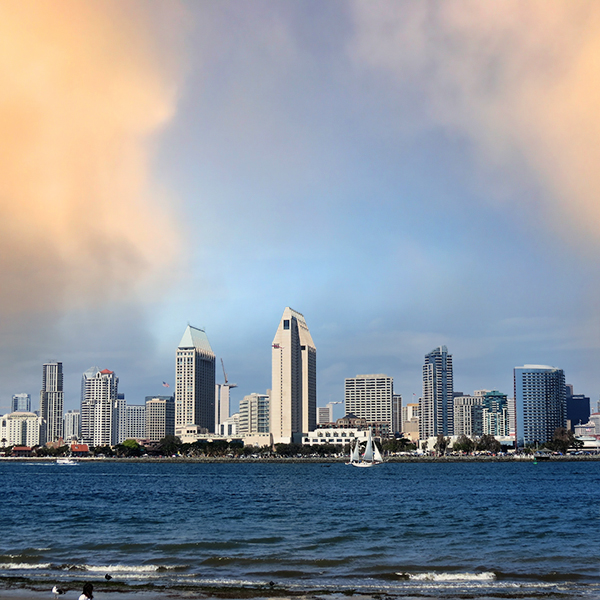
San Diego DUI Lawyer

DUI arrests remain common throughout California. According to the California Department of Motor Vehicles’ DUI Management Information System, law enforcement agencies made approximately 1.34 million DUI arrests statewide during the 10-year period from 2012 through 2021, an average of roughly 134,000 arrests per year. Although DUI arrests generally declined over that period, California still recorded more than 110,000 DUI arrests in 2021. San Diego also consistently accounts for a substantial share of the state’s DUI enforcement. In 2021, San Diego was one of only five California counties to record more than 6,000 DUI arrests.

These numbers demonstrate how frequently California law enforcement agencies investigate and arrest drivers for suspected DUI. But an arrest is only the beginning of a case. It does not mean that the prosecution can prove the charge. Police must have a lawful basis for the traffic stop and arrest, and prosecutors must establish every element of the alleged offense beyond a reasonable doubt. Breath and blood testing, field sobriety exercises, officer observations, video evidence, and the circumstances leading to the traffic stop may all become important issues in the defense.

A San Diego DUI lawyer can begin reviewing both sides of the case immediately after an arrest. This is particularly important because a California DUI arrest can trigger two separate proceedings: the criminal prosecution in court and an administrative action involving the California Department of Motor Vehicles. The deadline for requesting a DMV hearing can begin running well before the first criminal court appearance.

California DUI Laws

California law provides several ways that a person can be prosecuted for driving under the influence.

California Vehicle Code Section 23152(a) prohibits driving while under the influence of an alcoholic beverage. This provision focuses on impairment rather than a particular blood alcohol concentration.

Vehicle Code Section 23152(b) separately makes it unlawful to drive with a blood alcohol concentration of 0.08 percent or more. For that reason, a person arrested for an alcohol-related DUI may face charges under both Sections 23152(a) and 23152(b).

California’s DUI laws also apply to drugs. Vehicle Code Section 23152(f) prohibits driving while under the influence of any drug, while Section 23152(g) addresses driving under the combined influence of alcohol and drugs.

A drug does not have to be illegal for a DUI charge to arise. Prescription medications, over-the-counter medications, marijuana, and other substances can potentially result in a DUI prosecution if the government alleges that they impaired a person’s ability to drive safely.

Commercial drivers are subject to additional restrictions. Vehicle Code Section 23152(d) establishes a 0.04 percent BAC threshold when driving a commercial motor vehicle. Section 23152(e) also applies a 0.04 percent threshold to certain drivers who are transporting passengers for hire.

Can You Get a DUI With a BAC Below 0.08 Percent?

Yes. The 0.08 percent BAC limit is important, but it is not the only basis for a California DUI prosecution.

Under Vehicle Code Section 23152(a), prosecutors can pursue a DUI case based on alleged impairment even when a driver’s BAC was below 0.08 percent. The prosecution may rely on driving behavior, statements, physical observations, field sobriety tests, chemical testing, video evidence, and other circumstances.

This is one reason it is important to examine the entire investigation rather than assume that a single BAC result determines the case.

What Evidence Is Used in a San Diego DUI Case?

A DUI prosecution may involve considerably more evidence than the result of a breath or blood test.

Police reports commonly describe why the officer initiated the traffic stop, how the vehicle was allegedly being driven, statements made by the driver, physical symptoms the officer associated with intoxication, and performance on field sobriety exercises.

Additional evidence may include body-camera footage, dashboard-camera footage, dispatch recordings, civilian witnesses, breath-testing records, blood-test results, toxicology reports, and laboratory documentation.

A San Diego DUI defense lawyer can compare these materials to determine whether the prosecution’s evidence is internally consistent and whether law enforcement complied with constitutional and statutory requirements.

DUI Breath and Blood Tests

Chemical testing frequently plays a major role in California DUI cases, but a test result should not automatically be treated as infallible.

Breath-testing devices must be properly maintained and operated. The circumstances surrounding a breath test can also become important when determining whether the reported result accurately reflects a person’s BAC.

Blood testing raises different issues. Depending on the case, a defense investigation may examine how the sample was collected, labeled, transported, stored, analyzed, and documented. Chain-of-custody problems, laboratory procedures, contamination, or other irregularities may affect the reliability or weight of the evidence.

Timing can also be important. Alcohol is absorbed and eliminated over time, meaning a chemical test performed after driving does not necessarily establish precisely what a person’s BAC was at the time the vehicle was being driven.

The California DMV Process After a DUI Arrest

A DUI arrest can initiate two proceedings: the criminal case in court and a separate administrative proceeding involving the California Department of Motor Vehicles.

These proceedings are related but distinct. The criminal court determines whether the prosecution can prove the criminal charges and, following a conviction, what penalties apply. The DMV proceeding concerns the person’s privilege to drive.

After receiving an Administrative Per Se suspension or revocation notice, a driver generally has only 10 days to request a DMV administrative hearing. Failing to act within that period can result in the administrative suspension taking effect without the driver receiving the ordinary opportunity to contest it at a hearing.

Because this deadline arrives quickly, contacting a San Diego DUI lawyer soon after an arrest can be particularly important.

What Happens If You Refuse a DUI Chemical Test?

California’s implied consent provisions are primarily contained in Vehicle Code Section 23612. After a lawful DUI arrest, California drivers are generally required to submit to a qualifying chemical test under the conditions established by the statute.

Refusing or failing to complete the required test can lead to additional driver’s license consequences.

Under Vehicle Code Section 13353, a first qualifying refusal can result in a one-year license suspension. A second qualifying refusal within the applicable 10-year period can result in a two-year revocation, while a third or subsequent qualifying refusal can lead to a three-year revocation.

A refusal is not always straightforward. The circumstances may raise questions about whether the officer provided the required advisements, whether the driver clearly refused testing, or whether a medical or factual issue affected the person’s ability to complete the test.

Penalties for a First DUI in California

A first DUI without aggravating circumstances is ordinarily prosecuted as a misdemeanor.

Under Vehicle Code Section 23536, a first DUI conviction can carry between 96 hours and six months in county jail and a statutory fine of between $390 and $1,000. The actual financial cost can be substantially higher after assessments, DUI programs, insurance increases, towing expenses, DMV fees, and other costs are considered.

Additional consequences may include probation, a driver’s license suspension or restriction, DUI education, and conditions imposed by the court.

Ignition interlock device requirements or options may also apply depending on the circumstances of the case and the driving privileges sought.

Penalties for Repeat DUI Offenses

California increases DUI penalties when a defendant has qualifying prior DUI-related convictions within the statutory lookback period.

Vehicle Code Section 23540 addresses certain second DUI offenses within 10 years and provides for increased penalties. Vehicle Code Section 23546 addresses certain third DUI offenses and carries still more serious consequences.

A fourth DUI within 10 years can potentially result in felony prosecution under Vehicle Code Section 23550. A prior felony DUI conviction can also significantly change how a later DUI case is charged and punished.

Determining whether an old case legally qualifies as a prior DUI is therefore an important part of defending a repeat-offense case.

Felony DUI Causing Injury

A DUI case becomes significantly more serious when another person is injured.

Vehicle Code Section 23153 addresses situations in which a person allegedly drives under the influence, violates the law or neglects a legal duty while driving, and causes bodily injury to someone other than the driver.

Depending on the circumstances, an injury DUI can expose a defendant to felony charges, incarceration, restitution, license consequences, and sentencing enhancements.

Causation is an important part of these cases. The prosecution must do more than establish intoxication and an accident. It must prove the elements required under the statute, including the connection between the defendant’s conduct and the alleged injury.

Marijuana and Drug DUI Cases in San Diego

Recreational and medical marijuana may be legal for adults under California law, but driving while impaired by marijuana remains illegal.

Unlike alcohol DUI cases, California does not use a universal per se THC threshold comparable to the 0.08 percent BAC limit for alcohol.

As a result, marijuana DUI cases may depend heavily on the officer’s observations, driving behavior, statements, field sobriety testing, toxicology findings, and other evidence of alleged impairment.

A positive test showing the presence of marijuana or another drug does not necessarily resolve when the substance was consumed or whether it impaired the person’s driving at the relevant time. These issues can make drug DUI cases particularly dependent on the specific facts and scientific evidence.

Defenses a San Diego DUI Lawyer May Investigate

There is no universal defense that applies to every DUI case. A defense strategy should be based on the evidence, the law, and the circumstances of the arrest.

Was the Traffic Stop Lawful?

Law enforcement generally needs a lawful basis to stop a vehicle. A defense attorney may examine the officer’s stated reason for the stop and compare it with video footage, dispatch information, witness accounts, and other evidence.

If evidence was obtained following an unconstitutional detention, the defense may have grounds to seek suppression of evidence.

Were Field Sobriety Tests Reliable?

Field sobriety tests are conducted on roadsides rather than in controlled environments. Performance can be affected by nervousness, fatigue, injuries, medical conditions, balance difficulties, footwear, lighting, weather, road surfaces, and whether the instructions were properly explained.

Can the Chemical Test Be Challenged?

Breath and blood evidence can be examined for procedural or scientific problems. The defense may investigate equipment records, laboratory procedures, sample handling, contamination concerns, test timing, and other issues that could affect reliability.

Can the Prosecution Prove Driving?

A DUI conviction requires proof that the accused drove. That issue can become particularly important when police encounter someone after an accident, near a parked vehicle, or after the alleged driving has already ended.

Are the Officer’s Observations Consistent With the Evidence?

Police reports are evidence, not unquestionable facts. Body-camera footage, witness statements, photographs, recordings, and chemical-test evidence may contradict or qualify statements contained in an officer’s written report.

Can a San Diego DUI Charge Be Reduced or Dismissed?

Potential outcomes depend heavily on the facts.

Some DUI cases are dismissed because the prosecution cannot establish an essential element or because important evidence is suppressed. Other cases may be resolved through negotiations that result in reduced charges or penalties. Still others proceed to trial.

Potential weaknesses involving the traffic stop, proof of driving, chemical testing, alleged impairment, officer credibility, or other evidence can influence how a case is resolved.

An attorney cannot legitimately promise a dismissal or particular result. What a defense lawyer can do is investigate the evidence, identify weaknesses in the government’s case, and pursue the strategy most appropriate under the circumstances.

Why Choose the Law Office of Joshua R. Bourne for a San Diego DUI Case?

Joshua R. Bourne has practiced criminal law in San Diego for more than two decades. He began his legal career as a Deputy City Attorney for the City of San Diego, where he gained experience prosecuting cases before moving into private practice.

Mr. Bourne later established the Law Office of Joshua R. Bourne in 2006. His criminal defense practice includes misdemeanor and felony cases, with a particular focus on DUI and domestic violence defense.

His professional background provides insight into both sides of a criminal prosecution. He has also pursued DUI-focused continuing legal education and is a member of professional organizations including the California DUI Lawyers Association, California Attorneys for Criminal Justice, the San Diego Criminal Defense Bar Association, and the San Diego County Bar Association.

The Law Office of Joshua R. Bourne is located at 185 F Street, Suite 100 in downtown San Diego, only blocks from the downtown courthouse.

Frequently Asked Questions About San Diego DUI Charges

Is a San Diego DUI a Misdemeanor or Felony?

Most first-time DUI cases that do not involve injury are misdemeanors. A DUI can potentially be prosecuted as a felony when it involves qualifying injuries, multiple prior DUI convictions, or certain prior felony DUI convictions.

Will My License Automatically Be Suspended?

A DUI arrest can trigger an administrative DMV action, but drivers have the right to request a hearing in qualifying cases. The deadline to request an Administrative Per Se hearing is generally 10 days after receiving notice of the suspension or revocation.

Can I Be Charged With DUI for Prescription Medication?

Yes. California’s drug DUI statute is not limited to illegal drugs. A driver can potentially face DUI charges when prescription or over-the-counter medication allegedly causes impairment.

Is a DUI Conviction Guaranteed if My BAC Was Over 0.08 Percent?

No. A chemical-test result is important evidence, but the prosecution must still establish the required elements of the offense. The legality of the stop, testing procedures, timing, equipment, sample handling, and other evidence may need to be examined.

Speak With an Experienced San Diego DUI Lawyer Today

A DUI arrest can threaten your driver’s license, freedom, employment, finances, and reputation, but an arrest does not determine how the case will end. You have the right to challenge the government’s evidence and defend yourself in both the criminal and administrative processes.

At the Law Office of Joshua R. Bourne, we represent people facing first-time DUI charges, repeat DUI allegations, alcohol DUI, drug DUI, chemical-test refusal allegations, and serious felony DUI cases throughout San Diego.

If you or someone you care about has been arrested, acting quickly is important, particularly because of the short deadline for requesting a DMV hearing. Call the Law Office of Joshua R. Bourne at (619) 238-8242 for a free consultation with an experienced San Diego DUI lawyer and learn how the firm can help protect your rights, your driving privileges, and your future.

Client Reviews

This attorney was so responsive, honest and professional! I'm a 67 year old female with dementia, and was involved in an...

Susan B.

Joshua Bourne is an excellent lawyer! He has helped me twice and both times was able to get my case dismissed and stuck by...

Kent A.

Joshua was extremely helpful in representing my case. He knows the law and process very well. At all times he was very...

Andrea

Contact Us Now

background-meet-attorney-v5.jpg

Free Consultation (619) 238-8242